 Shaper Collective
Generative Media is Still Finding its Format
Reflections from GenMedia on what becomes possible when anything can become media, and what it takes to make people care.
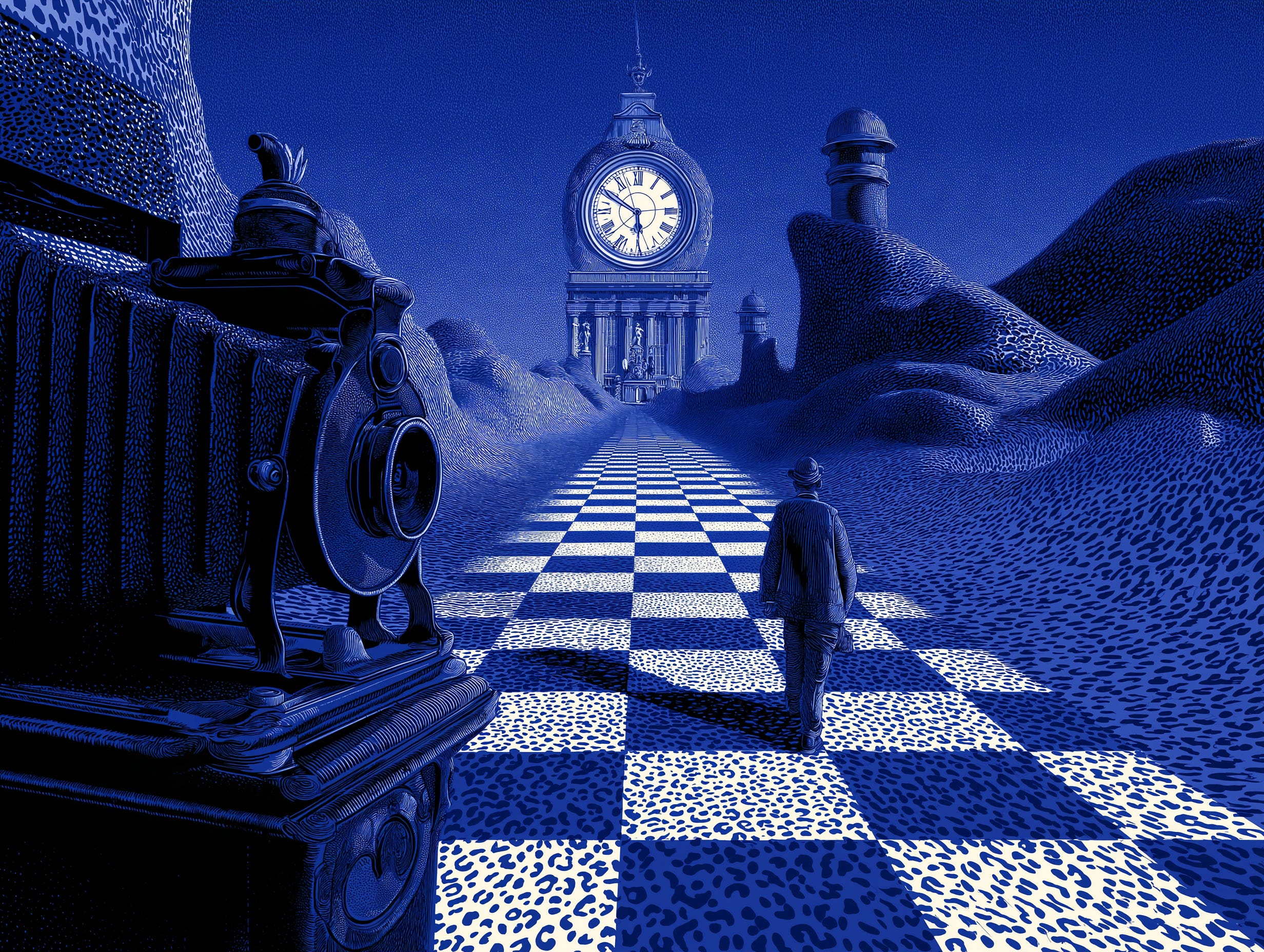
The year is 1895 and you’re standing in front of a new machine that can capture moving images and project them onto a screen.
You think to yourself: oh! We can film plays and show them to larger audiences.
Then you realize the camera doesn’t have to stay in front of the stage. You can take it outside. Move in close enough to catch an expression someone in the back row would never see. Cut from one place to another. Hide something outside the frame until you’re ready for the audience to see it. You can play tricks with light and sound—movie magic is born!
The camera’s affordances gave the world a new way to tell a story and film developed a language of its own.
Now we have models that can turn language into pixels in near real time. What are we going to do with them?
That was the question at fal’s GenMedia conference in San Francisco last week. Today, OpenAI will release a series of agentic products that will capture headlines. Generative media won’t, but it’s no less fascinating. If you haven’t taken stock of this moment yet, here’s where we are:
We have generative models that can create production-ready content. They transform text and other inputs into content in any style. Models that once created discrete artifacts like images, video, audio, etc. are becoming multimodal and trending towards world models with realistic physics. They cost less, generate faster, and have higher quality. This inflection is enabling new kinds of attention capture and storytelling.
I will not summarize the 2026 fal Generative Media report, but it is worth reading if you want to go deeper.
A few trends and reflections on this moment:
Cheaper production changes which stories are worth attempting
Our world is constrained by cost. Mass market used to be the only risk worth taking, but this may not be the case for long. Every writer has a pile of screenplays that never saw the light of day. Advocacy groups deserve video explainers but can only serve static ads. Politicians rely on emails instead of creating content to remind us why the status quo is worthy of change, and what a different future could look like.
In a world where costs collapse, AI content will empower great storytellers speaking to smaller audiences.
Disruption and automation are not new
We heard from former Pixar animators who remembered being disruptors themselves. One example they discussed was the Bob Parr train-yard workout sequence in The Incredibles. A single animator experimented outside the production pipeline to create it. Some of those innovations were folded in as best practices.
A Netflix SFX artist I spoke with at lunch said he uses AI more often and has more work than ever.
There is a moral panic over AI slop. But formulaic and low-quality content is not new. Neither are remixes, satire, and reality TV. In advertising and PR, whether we like to admit it or not, our baseline often falls short of quality consumers expect in content that comes alongside it.
Generative AI is asking us to level up in areas where it was never before possible.
Speed is transformative
In public affairs, a crisis response has a shelf life. Now, instead of having a crisis response toolkit of press releases and statements, we can have ready-made video assets that an agent can assemble in minutes.
Faster generation enables quicker experimentation. You can try more things and respond to what people are saying. That advantage depends on being able to get the work approved, too. A model can generate quickly while a communications team waits days for a decision.
But speed also makes new experiences possible. Imagine selecting a piece of clothing from a screen and trying it on in real time as you stand there. Or playing a game where your next move is generated in real time. Or talking to a digital twin of a politician to understand their views.
The opportunity for one-to-one media has never been greater. Imagine sending a staffer a customized video in advance of a meeting, based on their public work and the issues they care about. Then imagine they can ask a follow-up question out loud. The system uses that question to decide what to explain next, generates the visuals, and talks them through it. Speech, reasoning, images, and video become parts of one experience. That is the kind of convergence I discussed at the beginning.
Some executions will feel kitschy at first, like when AI ‘actress’ Tilly Norwood oddly switching to Mandarin during a recent segment on Piers Morgan. But I’d bet you’ve already seen AI-generated content that felt so natural you didn’t notice.
Can’t AI just do that?
Many of us have heard the C-suite say “Can’t AI do that?” Typically, the answer is not without a smart human. Despite the best efforts of consumer and prosumer AI content creation platforms, aligning vision and outcomes remains challenging.
Here’s an example: We were creating content for a client who insisted on logo consistency on a racing vehicle. Despite using state-of-the-art models, shapes got muddled and text became garbled across frames. Getting it right required creating a 3D model of the truck, recording it in Blender, and using a generative video model as the rendering engine.
A model’s ability to produce a striking image tells you relatively little about whether it will satisfy the stringent requirements of brand safety and consistency. There is still a lot of work in getting exactly what you want.
And why should it be easy? We’re building worlds out of pixels for gosh’s sake—it’s remarkable that any of this works at all!
Distribution and demand creation remain critical
Hollywood’s risk calculus may change if content is cheaper and faster to create. It’s also possible that the money will just be reallocated to marketing. New approaches to distribution are emerging for hybrid entertainment.
Gossip Goblin’s Zack London releases roughly three-minute vertical episodes three times a week, with individual stories expanding a shared world. His studio reports more than three million followers on social media and is developing a feature, Gods Don’t Give Gifts. Those short episodes give people a way into a larger story before there is a movie ticket to sell.
For AI video, satire has gained a foothold in part because social commentary has long allowed for absurd and imperfect visuals in ways feature films do not. Cartoons and shows like SNL have given us plenty of practice enjoying something we know isn’t real.
What interests me most is the story someone couldn’t make before. Maybe the audience was too small to justify the budget or the idea needed a medium that could respond in real time.
We can already use these tools to make more of what we know. I want to see what happens when we stop pointing the camera at the stage.
Originally published on The Influence Model