
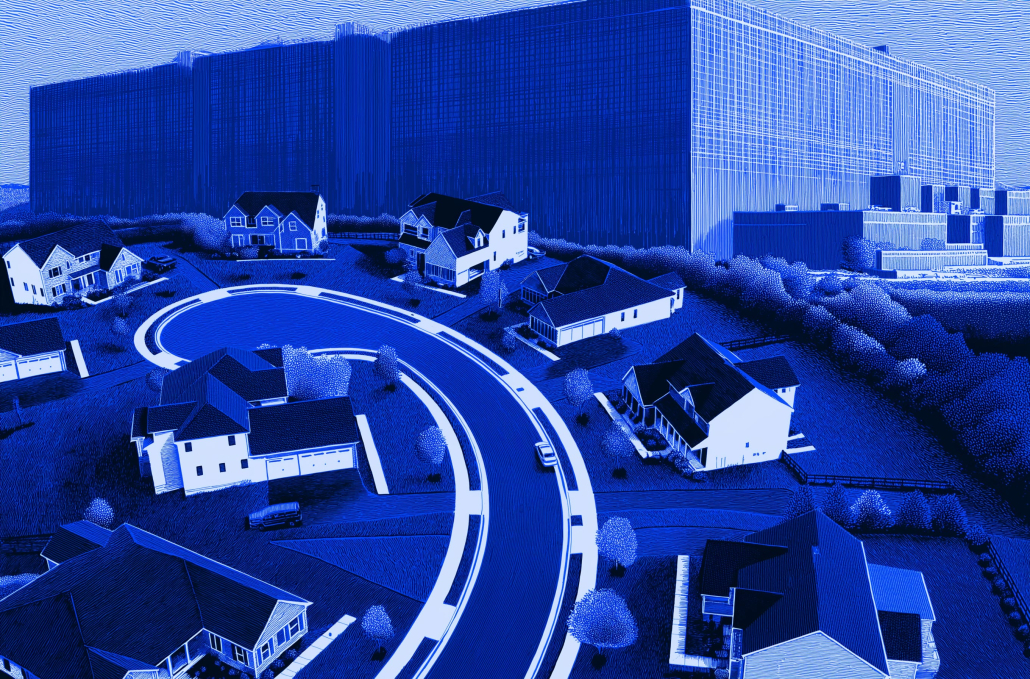
The Backyard Problem
The data center backlash has officially reached the pee-jar stage. Jason Kelce spent Florida’s primary day walking through a field toward a data center, holding a jar of urine, pledging to “send your pee to the AI data center of your choice,” so facilities stop draining local water. Liquid Death and Garage Beer, the beer brand the Kelce brothers own, collaborated on the 90-second spot the day Florida voted.
The data center backlash has been an “‘oh shit’ moment,” for the industry. A leaked memo from the Senate Republicans’ campaign arm blamed tech companies for the “toxic brand” now attached to data centers and warned it is dragging down Sen. Jon Husted in Ohio. Alexis Ohanian posted “hey guys we gotta figure out a new narrative on this data center thing.” Trump, who has stayed unusually mild on the issue (and is on X today blaming China for the backlash), admitted that data centers “can use a little public relations help.” Jimmy Iovine went further in a New York Times interview saying, “The AI companies have the worst public relations in the history of the world.”
The ‘It’s China’ counter narrative is growing legs. On Thursday night, X’s safety team reported roughly 200 accounts from a suspected Chinese bot farm “posting in a manner that could manipulate a legitimate debate about American AI and energy policy,” complete with cartoons of data-center operators enriching themselves. Veterans of these fights doubt the framing alone will save anyone. “If you can get both Greg Abbott and Kathy Hochul agreeing on something, it’s probably not a Chinese psyop,” Jim Prosser, the former Twitter head of corporate communications, told Axios. The fracking industry may provide useful historical context. In Denton, Texas outspent a local ban campaign ten to one, floated Russian influence without evidence, and lost 59 to 41 anyway.
Microsoft’s chief communications officer Frank Shaw told Axios that “you get better communications outcomes when you develop specific programs that address the issue, not when you modify messaging.” And the counteroffensive’s friendliest idea, cash “data center dividends” for host communities modeled on Alaska’s oil fund, reaches for checks instead of talking points.
AI keeps getting cheaper and more effective at doing real work while the fight over where it physically lives is happening in county zoning meetings. Two months until midterms, hopefuls seem to be souring against the buildings going up in American farmland and backyards.
The Signals This Week
1. AI Video’s Inflection: Faster to Generate Than Watch
A fal engineer pointed a video model that renders faster than playback at Twitch, and chat now steers an endless AI cartoon channel.
fal introduced H3 Max on August 26, a post-trained variant of MiniMax’s open-weight H3 video model that generates a high-quality five-second clip in under three seconds, roughly 35 times the speed of the official H3 endpoint. Rehan Sheikh, an engineer at fal, hooked it to a Twitch stream styled after Rick and Morty’s interdimensional cable: a never-ending channel of AI-generated TV where prompts from the chat change the scenes in real time. Sheikh posted, “maybe there’s some tipping point where the models are cheap enough where now it makes sense to generate on the fly rather than recommend on the fly.”
2. The Think Tank That Never Existed
Israel set up and funded a think tank with 124 reports built to be read by AI crawlers.
A Guardian investigation discovered that the “Hanover Institute for Public Policy” has no legal entity and likely exists only to shape AI responses to questions about Israel. In early August, it published 124 reports totaling more than 560,000 words, presenting Israel’s position on Gaza as neutral research, and the site carried an llms.txt file telling AI systems how to read it. The site is designed with complex backlinking so that it is more likely to be viewed as authoritative by crawlers. One 2022 Nature study on antisemitism is cited 454 times across 88 reports, and 55 reports attribute casualty figures to “a party to the events.”
3. WSJ Blessed an AI Op-Ed
The Wall Street Journal defended Stanley Druckenmiller’s AI-assisted op-ed the same week LinkedIn’s “AI slop” button passed a million clicks.
Druckenmiller’s op-ed criticizing Treasury Secretary Scott Bessent’s bond-market interventions ran in the Journal last week and was written with AI help, which he confirmed when NOTUS asked. The Journal defended the piece rather than correcting it, saying “AI is a fact of modern life,” and what matters is that the essay reflects the author’s genuine opinion. Readers were not as enthused.
4. Cory Booker, ‘Slop Aggregator,’ Is Winning TikTok
Booker posts to TikTok 135 times a month, mostly other people’s videos, and has 329 million views this year to show for it.
Kyle Tharp’s Chaotic Era tallied the numbers earlier this month, revealing a strategy designed to earn attention. Booker treats his two accounts as an aggregation operation, downloading other users’ heartwarming and openly corny videos and re-uploading them with a caption and a shoutout, posting fare more than any other elected official. In return, he’s received more than 329 million views this year, a 2026 record for a Democratic politician. Alexandria Ocasio-Cortez has 18 million over the same period. Gavin Newsom has 165 million.
5. The Synthetic Voter Is a One-Variable Guess
Researchers ran 21 million simulated survey responses and found the personas quietly drop race and religion, the strongest real drivers of opinion.
A new paper tested eight models against every real intersectional subgroup across 15 waves of Pew’s American Trends Panel. Real respondents’ opinions grow about 2.5 times more distinctive as identities stack; a Black evangelical is measurably more specific than the sum of “Black” and “evangelical.” Simulated respondents show no such effect. A single demographic feature explains a two-feature persona’s answers in 75 to 82% of subgroups, and the feature the models keep is chosen almost blindly, except that they systematically discard race and religion.
6. RushTok’s Breakout Star Was a Prompt
An Andreessen Horowitz partner built a sorority girl from one ChatGPT image, and the audience kept watching after the reveal.
Olivia Moore, a consumer AI investor at a16z, created “Janie” from a single ChatGPT-generated image and ran her through Alabama sorority rush on TikTok, prompting every outfit check and dance clip herself. Within a week Janie was averaging tens of thousands of views per video. Commenters worked out quickly that she was not real. They kept watching anyway, and Moore published the how-to in the Free Press.
7. AI Is Standard in Foreign Influence Operations
Meta says it finds AI-generated content in virtually every influence network it disrupts, including an Iranian one with 79,400 followers.
Meta took down 4 Facebook and 31 Instagram accounts from Iran that used AI-generated memes while posing as American activists, students, and graphic designers. The operators tagged real journalists and politicians and sent direct messages proposing content collaborations. About 79,400 accounts followed the network, which routed its traffic through US and Canadian proxies. Meta’s threat report says AI now shows up in virtually every influence network it disrupts.
8. AI Chatbots Mostly Refused Propaganda
NPR and NewsGuard fed 30 foreign disinformation narratives to six chatbots, which debunked them about three-quarters of the time.
NPR and NewsGuard built 30 questions from false narratives pushed by China, Russia, and Iran between December and July, including the Kremlin claim that Ukraine shelled its own thousand-year-old monastery, and posed them to six chatbots, four search engines, and Google’s AI Overviews. On average the chatbots correctly debunked the false premise about three-quarters of the time, a better rate than traditional search results, while AI Overviews performed worst of the three surfaces. If an educator saw students hit those numbers with a search engine, one researcher told NPR, “you would be ecstatic.” Google disputed the methodology and said some flagged responses have already been updated.
Podcast: “The Backyard Problem: Americans Say No to Data Centers”
Nate Burola, an environmental researcher whose path ran from marine science through federal environmental work into AI infrastructure. He runs the AI and Environmental Research Hub and a Data Center Policy Tracker that follows the issue across all fifty states, close to the town halls and utility commissions where the backlash actually lives.
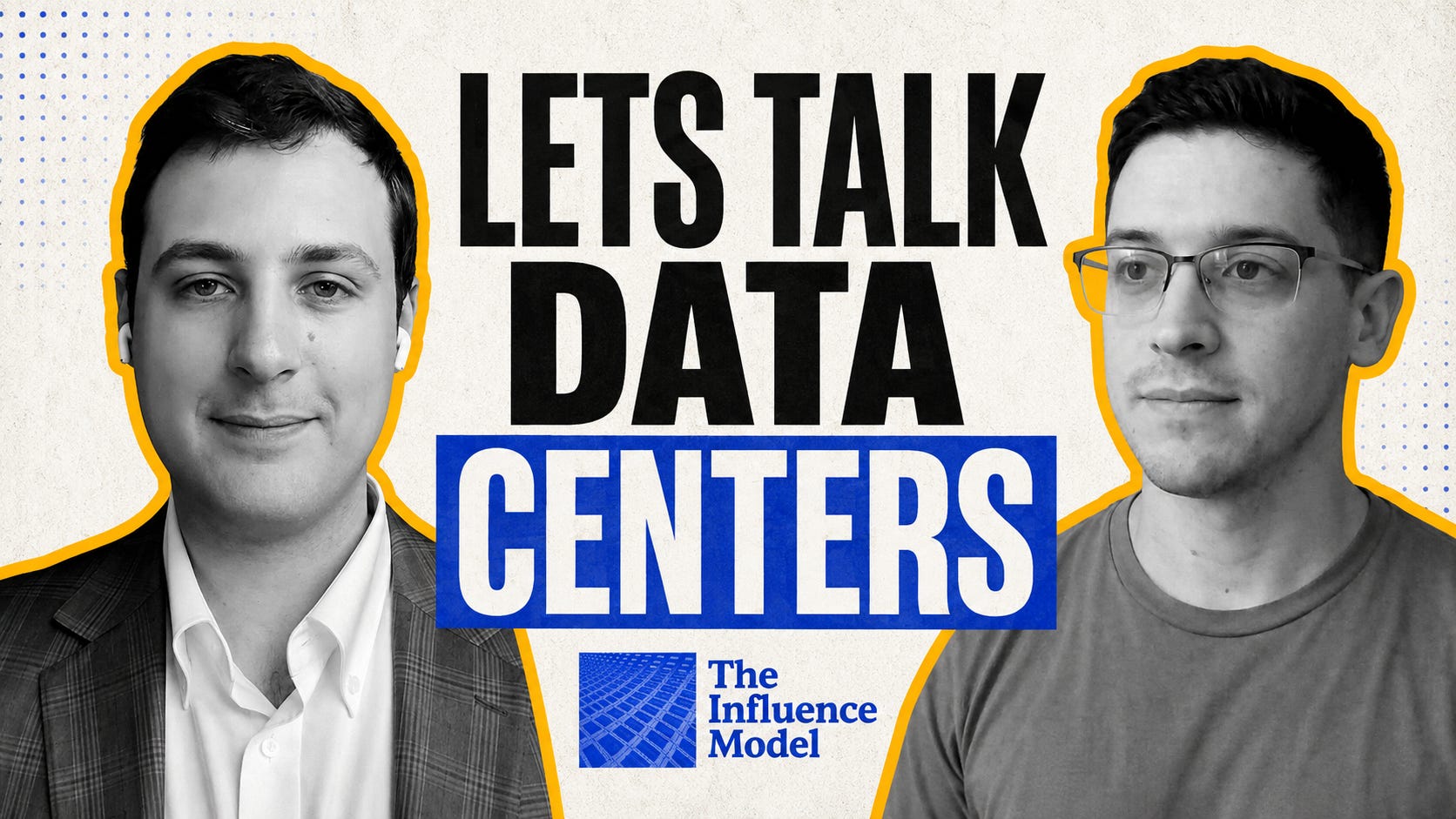
His first point is that the backlash is not one grievance. Data centers are the newest chapter in infrastructure NIMBYism, the pattern that met highways and transmission lines before them. Mark Cuban reads them as a proxy for anger at AI wealth. Underneath both runs a surveillance thread; claims that data centers are the vanguard of a future surveillance state, mixed with fury at Flock’s license-plate cameras, now reach Burola through his own YouTube Shorts feed. “It’s the combination of a lot of different issues coming together as we get closer to the midterms,” he told me.
Asked whether communications can still fix it, he said, “It’s definitely moved beyond communications for sure.” What works instead reads like a construction manual. Engage “before a shovel even moves dirt.” Write a community benefit agreement that maps “every single issue” the community has and answers it on paper. Publish consumption numbers instead of gesturing at them; a playbook line he read me holds that transparency “is ultimately less about reporting metrics than building trust.” And kill the NDAs, which tell residents their elected council “sold out to the data center developer.” Microsoft dropped them in March; Burola thinks “that has to be standard across the whole industry.”
The record on community benefit agreements is thin so far. When the Federation of American Scientists went hunting for executed agreements this year, it found eight, with exactly one fully executed and public: Lancaster, Pennsylvania’s, which covers transparency, water, energy, noise, and decommissioning, and which FAS still calls a starting point rather than a finished template.
Siting is the harder rule. The Prince William Digital Gateway, a proposed 2,000-acre Virginia campus billed as the world’s largest, died in July when the developer dropped its last appeal after courts voided the rezoning.
“You cannot brute force a data center development project in a community,” Burola said. “If the community does not want it, despite repeated engagement attempts to convince them otherwise, move somewhere else. That’s it.”
He forecasts more moratoriums as the midterms approach, “that’s just a given,” stacking on top of New York’s statewide pause and the Texas audit that runs toward December. State-level bans he doubts; a critic he cites called that route “economic suicide” for any state that tries it. What strikes him most is the coalition. “It’s rare that people agree on anything. And then all of a sudden data centers are front and center in the public eye. And it’s bipartisan.”
Burola is a one-person team. He builds the tracker with Codex and Claude on twenty-dollar plans, pulling Congress.gov and LegiScan data, and adds features as readers ask, a label generator here, a Google Trends hook there. “I’m a fan of data center development,” he told me. “Again, if we do it the right way.”
Thanks for reading. If you found this helpful, please forward it to someone new.
Best,
Ben


Leave a Reply
Want to join the discussion?Feel free to contribute!