
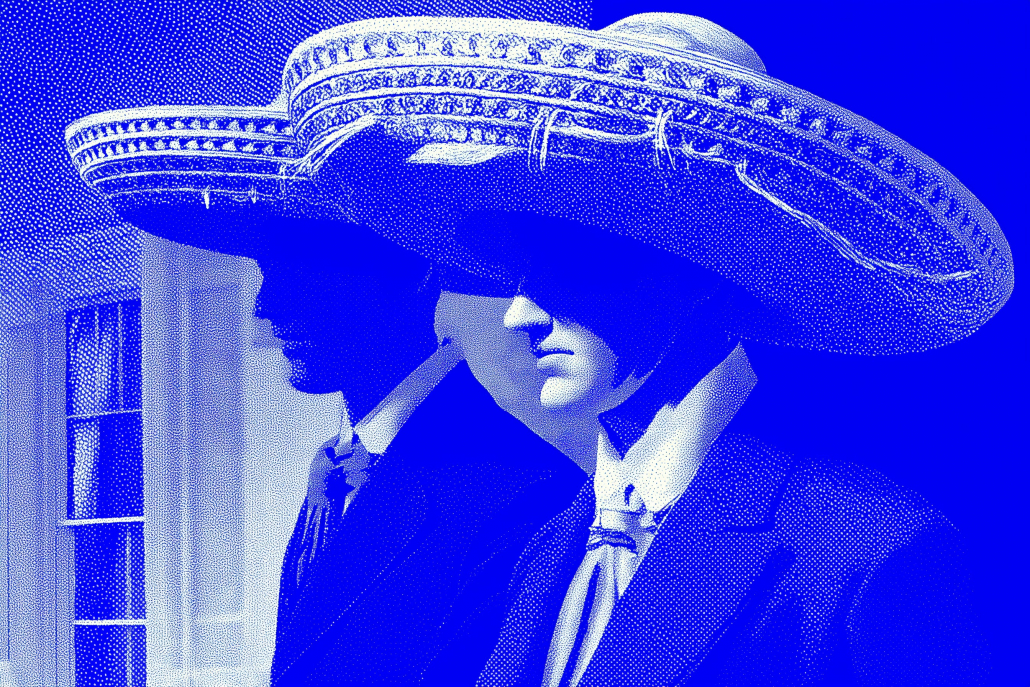
Trump’s AI Gambit Broke the Taboo. What Comes Next?
Mike Johnson stood at the podium and said it plainly: “The president uses social media to make a point. He is using satire to make a point.”
He was defending an AI-generated video Trump posted showing himself dropping feces on protesters from a fighter jet. Yes, you read that right. He wasn’t defending the tastelessness or absurdity, but defending the medium itself—AI generated content.
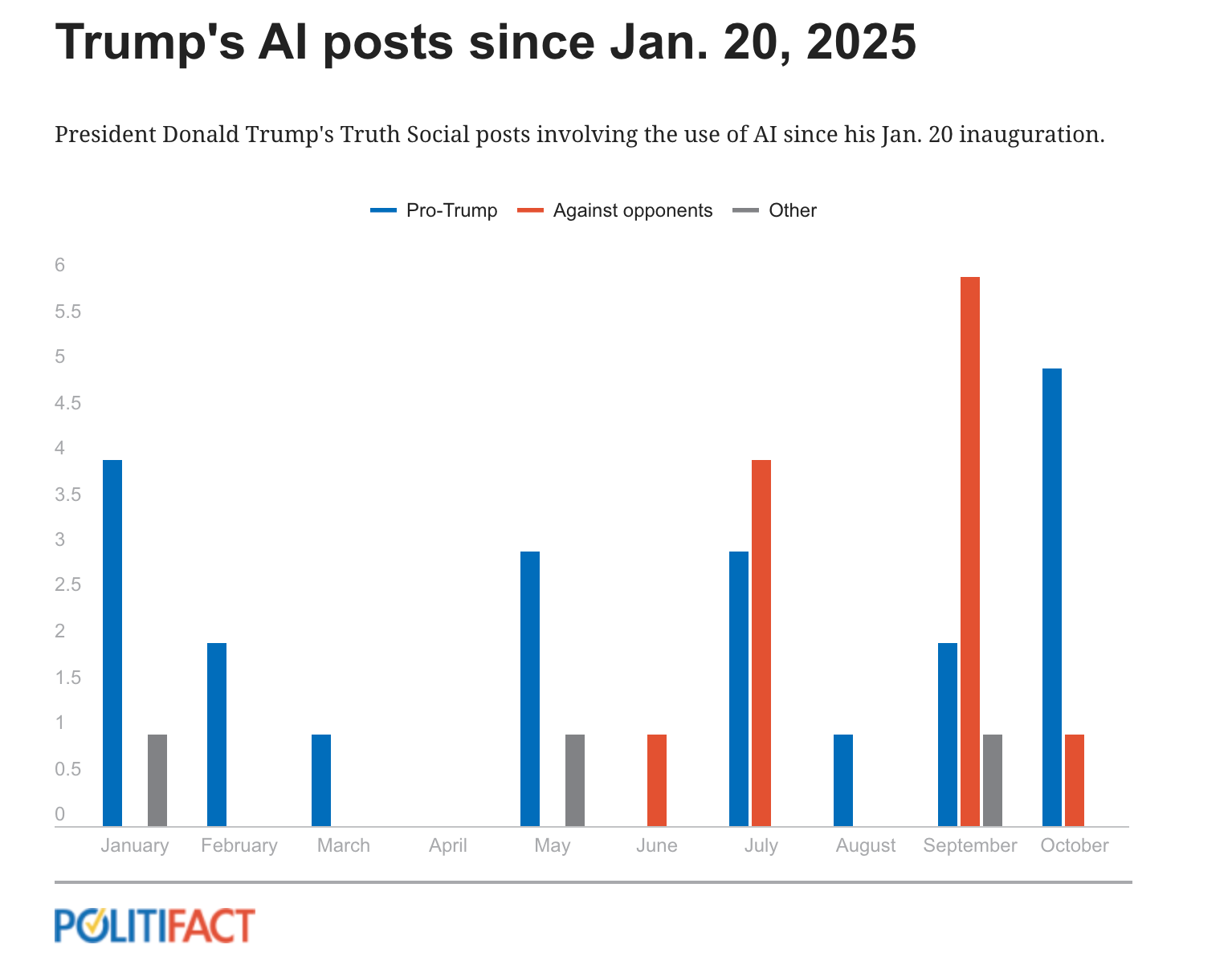
Trump has made AI-generated political content routine. PolitiFact analyzed his Truth Social account and found 36 AI posts since inauguration. Twenty-one promoting his image. Twelve degrading opponents. Three reinforcing policy positions. The posts ramped up dramatically starting in May, and by September he was posting AI content multiple times per week.
We’ve crossed a threshold. Below, we dive into what that might mean for the future of influence in Washington:
The Signals This Week
Eight signals of the future of opinion shaping and what they mean for people inside the Beltway.
1. Only 1 of 8 Platforms Surfaces AI Content Labels
Washington Post uploads synthetic video across major platforms, finds content credentials are theater
The Washington Post ran an experiment: upload the same AI-generated video to eight major social platforms and see which ones surfaced transparency labels. Only one platform showed users “this is synthetic” information, despite multiple platforms claiming to support Content Credentials and C2PA standards.
The gap between announced policy and actual implementation is enormous. Most platforms have adopted labeling frameworks but haven’t deployed the detection infrastructure. Users scroll past synthetic content with no indication it’s artificial.
Something to think about: Platform-side labeling won’t protect you. Build your own provenance system instead. Burn watermarks directly into video, maintain a public asset registry on your website, and keep cross-platform rebuttal kits ready. When your opponent deploys a deepfake, you need to respond in minutes across every channel simultaneously, not wait for platforms to maybe flag it eventually.
2. Virginia Candidate Debates AI Version of Opponent Who Declined
John Reed creates synthetic Ghazala Hashmi after she refuses debate invitation
When Virginia Democratic Lieutenant Governor candidate Ghazala Hashmi declined to debate Republican John Reed, he built an AI version of her and debated it instead. The synthetic Hashmi answered questions using her public statements and policy positions, with clear disclosure it was AI-generated.
The tactic flips conventional campaign strategy. Declining debates used to mean controlling the narrative by limiting your exposure. Now it could mean your opponent controls both sides of the conversation while you look like you’re hiding.
Something to think about: If you decline engagement, your opponent might fill the void with a synthetic version trained on your record or a social media statement you never made. The defensive play is pre-emptive: maintain such a strong presence across formats that there’s no vacuum to fill. The offensive play is more interesting. When your opponent goes dark or refuses accountability, you can now force the debate anyway using their own words against them.
3. National Republican Senatorial Committee Deploys Schumer Deepfake in Campaign Ad
Major party committee uses synthetic video with minimal disclosure, tests new campaign boundaries
The NRSC released a 30-second digital ad featuring an AI-generated video of Chuck Schumer saying “Every day gets better for us.” The phrase came from a print interview, but the video showing him speaking it is entirely synthetic. Disclosure was minimal. The quality was remarkably high.
Something to think about: If institutional party committees are using deepfakes, it’s a signal for other groups of increasing normalization and attitudinal shifts. It’s important to own the transparency narrative before you’re forced into it. And more importantly, build the rapid response infrastructure to counter opponent deepfakes within hours, not days.
4. Trump Administration Turns AI Imagery Into Daily Communications Strategy
Politifact analysis shows synthetic visuals now routine in White House messaging
Politifact documented the Trump administration’s systematic use of AI-generated imagery across official communications. The president appears as various heroic figures while opponents are rendered as villains with images are deliberately absurd and self-evidently synthetic.
The mechanism is really worth studying: criticism becomes distribution. In other words—AI-enabled rage baiting. Opponents share the images while condemning them, amplifying reach far beyond Trump’s direct audience. The AI content functions as both message and distribution hack simultaneously.
The analysis found Trump’s most-shared AI post was a deepfake video depicting Hakeem Jeffries and Chuck Schumer set to mariachi music. Millions of views, massive engagement, zero traditional media spend.
Something to think about: Every condemnation is free amplification. This works because the shareability comes from outrageousness rather than deception. For serious campaigns, the lesson is about engineering virality through predictable reaction. Identify what your opponents cannot resist responding to, then use AI to create high-fidelity versions at volume.
5. AI Models Predict Consumer Behavior With 90% Accuracy
Researchers validate synthetic focus groups as reliable alternative to traditional market research
A study showed large language models can replicate human purchase intent with approximately 90% accuracy using a method called Semantic Similarity Rating. Instead of asking AI to pick a number (which introduces bias toward neutral responses), researchers had models write open-ended qualitative responses like humans would in surveys. Then human raters scored those responses for intent, just like they would with real survey data.
The breakthrough is that AI customers explain why they would or wouldn’t buy in natural language. You get realistic variance and reasoning before exposing messaging to live audiences.
Something to think about: Build synthetic focus groups of digital twins representing your target stakeholders. Feed in your talking points, landing pages, or messaging frameworks and get simulated reactions with reasoning before you launch. This creates a fast-fail mechanism for message testing while minimizing exposure of weak creative to real audiences.
6. Mollick’s Guide to Picking Your AI Tools in Late 2025
Penn professor publishes comprehensive advice on which AI models to use when
Ethan Mollick published an updated guide comparing advanced AI models and tools across Claude, Gemini, ChatGPT, and Grok. The analysis covers model tiers, when to use chat versus agentic modes, privacy controls, cost trade-offs, and which models excel at specific tasks.
The guide matters because it cuts through marketing claims with neutral evaluation. Mollick tracks the AI market more carefully than almost anyone and distills practical deployment advice rather than speculation about capabilities.
Something to think about: Washington operators can’t just “pick ChatGPT” and hope anymore. You need to design your AI stack deliberately. Decide whether you need chat for ideation or agentic mode for workflow automation. Map which models match your privacy and regulatory constraints. Build a governance layer that’s consistent across your team. Use Mollick’s guide as an internal briefing document. When everyone on your team understands which tool to use when, you eliminate the amateur hour mistakes that leak strategy or produce unusable output.
7. WPP Launches Platform to Let Brands Bypass Agencies
Ad giant responds to AI threat by building tools for clients to produce content in-house
WPP unveiled Open Pro, an AI platform designed to let brands plan, create, and distribute advertising themselves without agency involvement. The platform collapses production timelines and reduces the friction that traditionally justified agency relationships.
This is a defensive move by one of the world’s largest agency holding companies. They’re acknowledging that clients are already using AI to produce first drafts and increasingly questioning why they need full-service agencies for execution.
Something to think about: WPP’s automation threatens their own business model, which means it works. Apply the same approach to persuasion campaigns. Build one creative concept, then spin up multiple district-specific variants automatically with localized issue framing, candidate details, and constituent examples using AI. Your traditional operation can’t match that velocity.
8. AI Attack Ad Draws Fire, Tests Synthetic Content Boundaries
Cuomo campaign deploys then deletes controversial AI-generated advertisement
An official account tied to Andrew Cuomo’s mayoral campaign posted an AI-generated attack ad featuring dramatized vignettes of “criminals who support” opponent Zohran Mamdani’s policies. The spot showed shoplifters, drunk drivers, and pimps. Critics called it racially charged stereotyping. Others argued it was obvious satire. Most agreed it wasn’t particularly well done.
from Politico observed that “the Cuomo campaign embracing AI generated video seems to have reduced the safeguards most campaigns have from making bad ads that get immediate backlash for featuring racist stereotypes (and also for being AI slop).” The ease of production appears to have collapsed editorial review.
Brigid Bergin noted the legal exposure: “In addition to being offensive and a shocking attempt at fear-mongering that doesn’t even pretend to engage in any political discourse, the ad released by the Cuomo campaign last night is clearly in violation of NY Election Law 14-106(5).” That law requires disclosure when AI creates materially deceptive political content. The ad carried no such label. Mamdani’s campaign is exploring injunctive relief.
Something to think about: When content creation becomes trivially easy, editorial judgment becomes the bottleneck. This spot likely took less time to produce than traditional video but needed the same level of strategic review. The speed tempts anyone to skip steps. Build pre-flight ethics review into your AI creative workflow. Red-team every piece for bias, stereotyping, and brand-safety issues before release. Speed of production demands speed of correction.
The First AI Presidency
President Trump’s approach to AI-generated content follows a pattern we’ve seen before with his media strategy: test boundaries until opposition exhausts itself, then operate freely in the new normal he created.
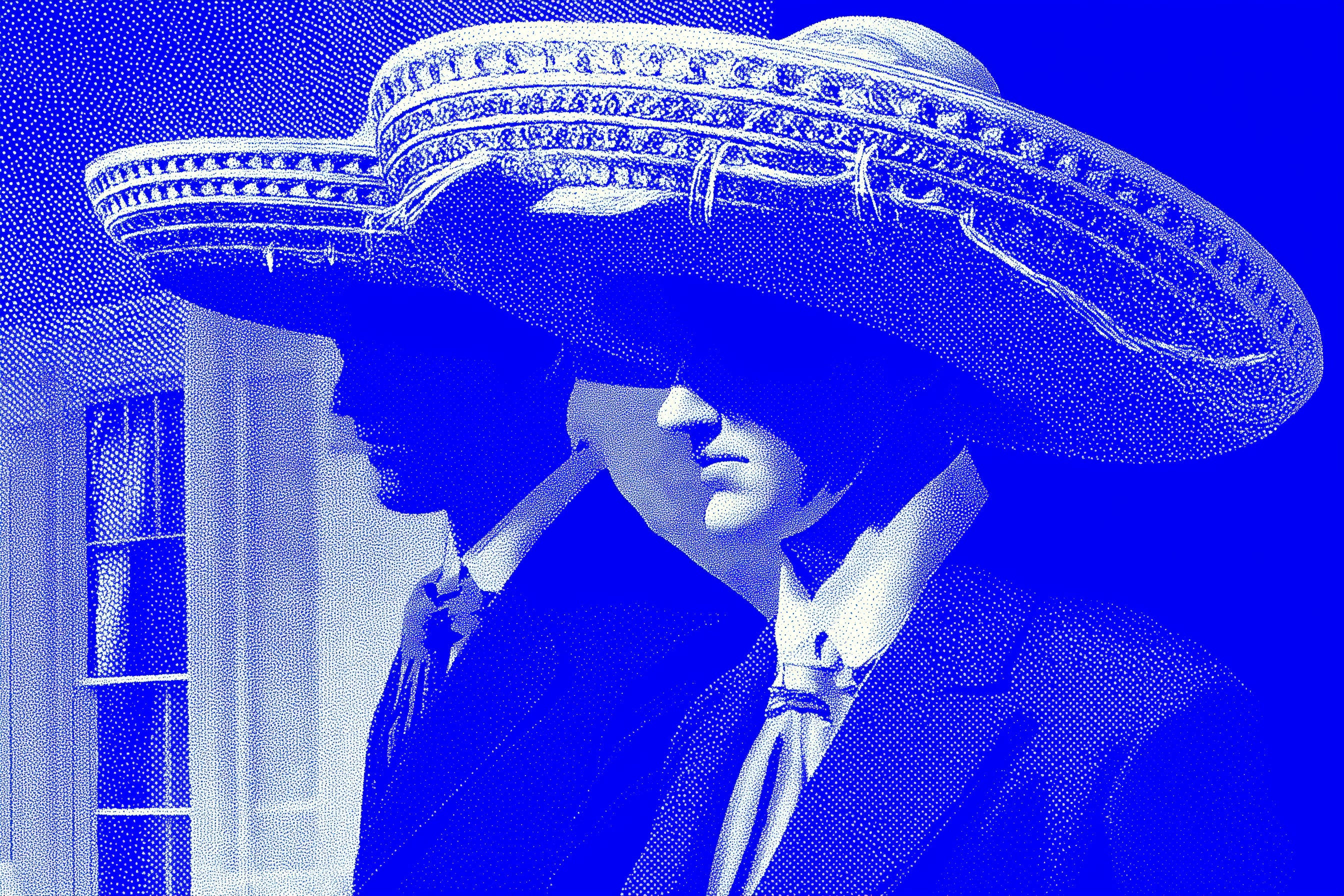
His Truth Social feed shows the evolution. Early posts in January and February were relatively benign like an image of himself as the pope or a darkened street scene with “FAFO” signage. By September, the guardrails were gone. Videos of Hakeem Jeffries in a sombrero. Chuck Schumer admitting Democrats have no voters. Nancy Pelosi confessing to insider trading.
This is an extension of Trump’s existing practice of creating worlds of good and evil, building dogma and labeling people. AI brings fidelity and color to that dogma. The posts deploy stereotypes and false narratives wrapped in entertainment, distilling complicated issues into their basest political talking points regardless of factual basis. When called on it, the defense is satire. When that doesn’t work, the defense is “I didn’t make it, someone else did.”
Katherine Ognyanova, a Rutgers communications professor, sees the difference clearly: “AI-produced content can be quite different from traditional memes, many of which were fairly low-quality images put in an easy to recognize format. Deepfakes can look indistinguishable from reality, and take considerable effort to debunk.”
Trump’s most shared AI post since inauguration was a deepfake video showing Jeffries wearing a sombrero with mariachi music playing while a synthetic Schumer says “Nobody likes Democrats.” It was reshared 19,400 times. The post packaged Republicans’ debunked talking point about Democrats wanting to give undocumented immigrants free healthcare into shareable satire.
The Strategy Behind the Slop
Similar approaches are showing up in campaigns at different levels, and more importantly, the shift in what’s considered acceptable is moving with them.
Virginia’s Republican candidate for lieutenant governor, John Reid, created an AI version of his Democratic opponent Ghazala Hashmi and debated it after she declined to debate him in person. The National Republican Senatorial Committee generated a video of Schumer grinning while saying the government shutdown was good for Democrats. It was a real quote, but not one Schumer said on camera.
Reid’s campaign promoted the AI debate like it was real. The NRSC defended their video as “working harder and smarter,” noting it had a watermark identifying the source and indicating it was AI-generated. As if disclosure makes synthetic content legitimate.
The posts serve multiple purposes simultaneously. They rally base voters with entertaining material. They flood the zone, making it harder for critics to focus on any single issue. They force opponents to respond to content that was generated in minutes, consuming their time and attention. Most importantly, they normalize AI-generated political content as acceptable campaign communication.
The democratization argument is gaining traction on both sides. Kelly Dietrich, CEO of the National Democratic Training Committee, teaches Democratic candidates how to use AI. His pitch: “Hundreds of thousands of candidates are running in local races around the country, and they raise less than $2,500. AI allows them to be incredibly more efficient and effective with their limited time, money and people.”
He’s not wrong about the efficiency gains. AI can show how target audiences might respond to messaging strategies, something campaigns historically spent thousands on through focus groups and surveys. It creates content for visual platforms quickly. It generates fundraising call scripts.
But Dietrich draws a hard line against deepfakes. The American Association of Political Consultants determined in 2023 that deceptive AI imagery violates its code of ethics, calling it a “dramatically different and dangerous threat to democracy.”
The problem is that “satire” provides cover for everything. Republicans defend their AI videos as jokes. No one believes Trump actually bombed Manhattan with feces or that Jeffries showed up at the White House in a sombrero. Where the line sits between satire and deception remains undefined, and the Trump administration is pushing it further every week.
The Policy Vacuum
Legislation to regulate AI-generated campaign content barely exists. The FCC proposed a rule requiring disclosures for AI-generated robocalls and robotexts. It wasn’t adopted. Critics said it was too broad and could penalize free speech or AI tools used to clean up images.
Virginia Governor Glenn Youngkin vetoed a bill requiring disclosures of AI-generated content in campaign materials, saying it had an impractical enforcement structure. Part of the challenge is AI’s rapid development pace. Officials can’t ensure regulations keep up with new use cases.
At least 26 states have written their own rules, creating a compliance nightmare for campaigns operating across jurisdictions. Texas prohibits deepfake videos intended to influence voters within 30 days of an election. Michigan requires disclaimers for AI-generated robocalls and political ads. Utah mandates disclaimers and embedded tamper-resistant digital content provenance.
These laws face constitutional challenges. Early litigation shows the legal ground remains unsettled. Meanwhile, Trump’s administration has accelerated AI development while reducing regulation efforts. One of his first executive orders during his second term revoked AI policies that “act as barriers to American AI innovation.”
The Arms Race Nobody Wanted
Trump’s embrace of AI mirrors his AI policy. His administration’s AI Action Plan removed Biden-era regulations the plan called “onerous” for AI innovation. It directed agencies to contract AI technologies, particularly large language models, that are “objective and free from top-down ideological bias.”
The White House X account, which has 2.9 million followers, has made at least 14 posts involving AI since the start of Trump’s second term. Other government accounts like the Department of Homeland Security share AI images. The White House posted in July: “Nowhere in the Constitution does it say we can’t post banger memes. The memes will continue.”
This creates a problem for everyone else. Lisa Kaplan, CEO of misinformation detection firm Alethea Group, puts it simply: “The increase in capacity to put out content is going to end up flooding the information space. How are people actually going to break through to voters?”
If Trump can generate 36 AI posts in ten months while managing the presidency, what happens when hundreds of campaigns adopt the same approach? When advocacy groups discover they can generate thousands of pieces of content targeting specific audiences? When foreign actors realize American campaigns now provide cover for synthetic content because “everybody does it”?
R. David Edelman, a senior fellow at the Brookings Institution who researches AI governance at MIT, describes the shift: “The ability to generate what we used to call deepfakes has now gone broadly out to the masses, and paired with the speed of social media proliferation, it put the ability to do slick, compelling videos, fictitious or real, into the hands of essentially anyone.”
The concerns about AI content are legitimate. There are real questions about democracy, authenticity, and trust that deserve serious consideration. But while those debates continue, something else is happening in the wild. State parties are deploying these tools. Congressional candidates are using them. The White House posts AI content and defends it as standard practice, with Mike Johnson calling it satire and the NRSC calling it working smarter.
There’s a window here for operators who can see past the debate to the reality of what already is happening. There is value in being early, just after the taboo breaks but before the approach gets completely commoditized. That’s where advantage lives.
Adapted from: Politifact and The Washington Post
Trump broke the taboo on AI generated content. If you’re hearing discussion of synthetic media deployed in your work, or preparing your own response protocols, hit reply. I want to know what’s actually happening on the ground.
And if someone on your team should be reading this, forward it their way.
Best,
Ben


Leave a Reply
Want to join the discussion?Feel free to contribute!