

The Influence Model
Welcome to the first edition of The Influence Model, a weekly newsletter for Washington insiders about how AI is reshaping the practice of influence and policy persuasion.
There’s a missing piece of the AI conversation in Washington. There are more than enough newsletters covering the horserace of AI product releases or the rising influence of AI companies in Washington. This newsletter is going to be a little different.
Each week, I’ll put together a roundup of the top signals on how AI is changing the practice of lobbying, campaigning and communications in Washington for insiders who are deep in this work.
Let’s get into it…
The Rundown
-
The Signals: Seven signals of the future
-
In the Wild: Real-time examples from campaigns
-
From the Trenches: Interview with (your name here)
The Signals This Week
Seven signals of the future and what they mean for people inside the Beltway.
1. The AI Video Gold Rush is in Swing
Washington Post reports a mad rush of creators using AI video tools to flood the internet and profit from remarkably realistic content
The Washington Post calls it “AI slop”: a flood of low-effort, high-volume AI videos designed to shock, amuse, or confuse their way into virality—and profit. One Idaho loan officer churned out 90+ clips in two weeks, racking up 180,000 followers and $5,000 a month in payouts.
Platforms like TikTok and YouTube have tried to flag and demonetize “mass-produced” AI content, but the arms race is tilted: creators just spin up new accounts and keep pumping. The economics are irresistible—industrial-scale engagement at pennies per clip.
Something to think about: The “AI slop” economy shows that virality requires attention, not authenticity. The lesson is clear: the next viral narrative may be less about what’s true and more about who can manufacture the most watchable fiction, fastest. Is Washington ready to compete for attention in this reality?
Read more: Making cash off ‘AI slop’: The surreal business of AI video – The Washington Post
2. Influence Operations Can Be a One-Person Job
King’s College research shows Influence campaigns can run end-to-end on consumer hardware
The economics of influence operations has been shifting dramatically, changing who can influence at scale. New research from King’s College War Studies shows that AI influence operations can now run end-to-end on consumer hardware.
Where previous operations required people to write posts, schedule content and farm engagement, large language models now collapse the work of an entire team onto silicon. The recipe is simple: model, persona design, memory, policy layer and platform interface. With costs plummeting, even individual actors can mount full campaigns.
The breakthrough? Small language models can run locally (on device), dodging Meta content flags and monitoring that makes the ChatGPT and Claude API trackable. These pocket-sized propaganda factories engage platforms directly, making them nearly invisible to current detection systems.
Something to think about: The same automation that powers covert operations works for legitimate advocacy. While platforms focus on detecting bad actors, there’s an opening for campaigns that can scale message testing, audience targeting and content creation without the overhead of traditional models.
Read more: Propaganda Factories with Language Models research
3. Trust Retreats to Known Sources as AI Floods the Internet
German study shows AI-generated fakes drive audiences back to verified publishers
When everything online could be fake, people retreat to sources they trust. A German newspaper study tested whether readers could distinguish AI-generated images from real ones. Results: only 2% got all three questions right. More than a third got every answer wrong.
The twist? Daily visits to the trusted news source jumped 2.5% immediately afterward, and subscriber retention improved by a third. “You can’t believe everything you read on the internet” is in overdrive, and people are retreating to known quantities.
Something to think about: Trust matters. But AI itself doesn’t destroy trust—and it could be used to create strong, trusted communities and sources. The real opportunity is building verification systems that audiences can rely on when the open internet becomes unreliable.
Read more: German newspaper study on AI-generated content detection
4. Google’s Nano-Banana Release Changes the Economics of Visual Content
Professional-quality image generation now costs four cents per creation
Google’s oddly named Nano-Banana image model solved one of AI generation’s biggest problems—consistency and style transfer. Now anyone can combine images like Photoshop and generate with consistent characters and elements. They also slashed prices: each generation costs around four cents.
AI image generation was already driving political memes to new heights, but Nano-Banana enables sophistication that rivals agency work. A single advocate can now generate more polished visuals in an hour than traditional teams create in days.
Early applications: ad variants generated on demand, real-time visual responses to breaking news, and personalized outreach materials for individual targets.
Something to think about: When content creation becomes practically free, expectations for quality and speed rise simultaneously.
Read more: The Implications of Nano Banana for Washington
5. AI Systems Inherit Human Psychological Vulnerabilities
University of Pennsylvania research shows classic persuasion techniques work on machines
Machines designed to resist manipulation can be convinced to comply 100% of the time using basic influence techniques—flattery about capabilities, manufactured social proof, commitment escalation. University of Pennsylvania researchers applied Robert Cialdini’s classic techniques from Influence: The Psychology of Persuasion and got AI systems to perform tasks they were never supposed to do.
The irony? When we train machines to “think” like humans, they inherit our psychological vulnerabilities.
Something to think about: If AI can be reliably influenced through psychological techniques, it means these systems may reliably predict the effectiveness of our persuasion strategies on human audiences. The same techniques that work on machines should work even better on the people we’re trying to reach.
Read more: The Verge research on chatbot susceptibility
6. ProphetArena Shows AI Forecasting Rivals Traditional Methods
AI models reading daily news outperform betting markets on political outcomes
ProphetArena pits AI models head-to-head against betting markets on political outcomes like “Who will run in 2028?” and recession probabilities. The models read news daily and output percentage predictions for key events. Early results suggest AI forecasting matches or exceeds traditional prediction methods.
If AI proves reliable at predicting outcomes (and I believe it will), it could fundamentally change how Washington plans for the future. Instead of quarterly polling or gut-level decision-making, imagine waking up each day with a dashboard of likelihoods guiding strategy.
Something to think about: If everyone gets access to the same accurate forecasting tools, competitive advantage shifts to controlling the information feeds that train those forecasting models. The real battle becomes influencing what the AI reads, not just what humans see.
Read more: ProphetArena AI prediction platform performance
7. Engagement Metrics Drive Polarization Even in Pure AI Networks
Research reveals structural bias toward divisive content across all platform types
Researchers created social platforms populated entirely with AI agents—no humans, no algorithms, just AI talking to AI. The result? Identical polarization patterns emerged across different AI models, even when bias within individual models was isolated.
The mechanism is structural: outrage generates reactions, reactions drive sharing, sharing creates visibility. Any platform using engagement metrics inherently favors polarizing messages over consensus-building communication.
Something to think about: Direct communication channels—newsletters, briefings, private networks—become more valuable as public platforms structurally favor divisive content. The future of serious influence may be building around these engagement-driven platforms, not through them.
Read more: Research on AI agent polarization patterns
AI In the Wild
How AI is actually being deployed in political campaigns and influence operations right now.
Trump’s Upscaled Photo Goes Viral
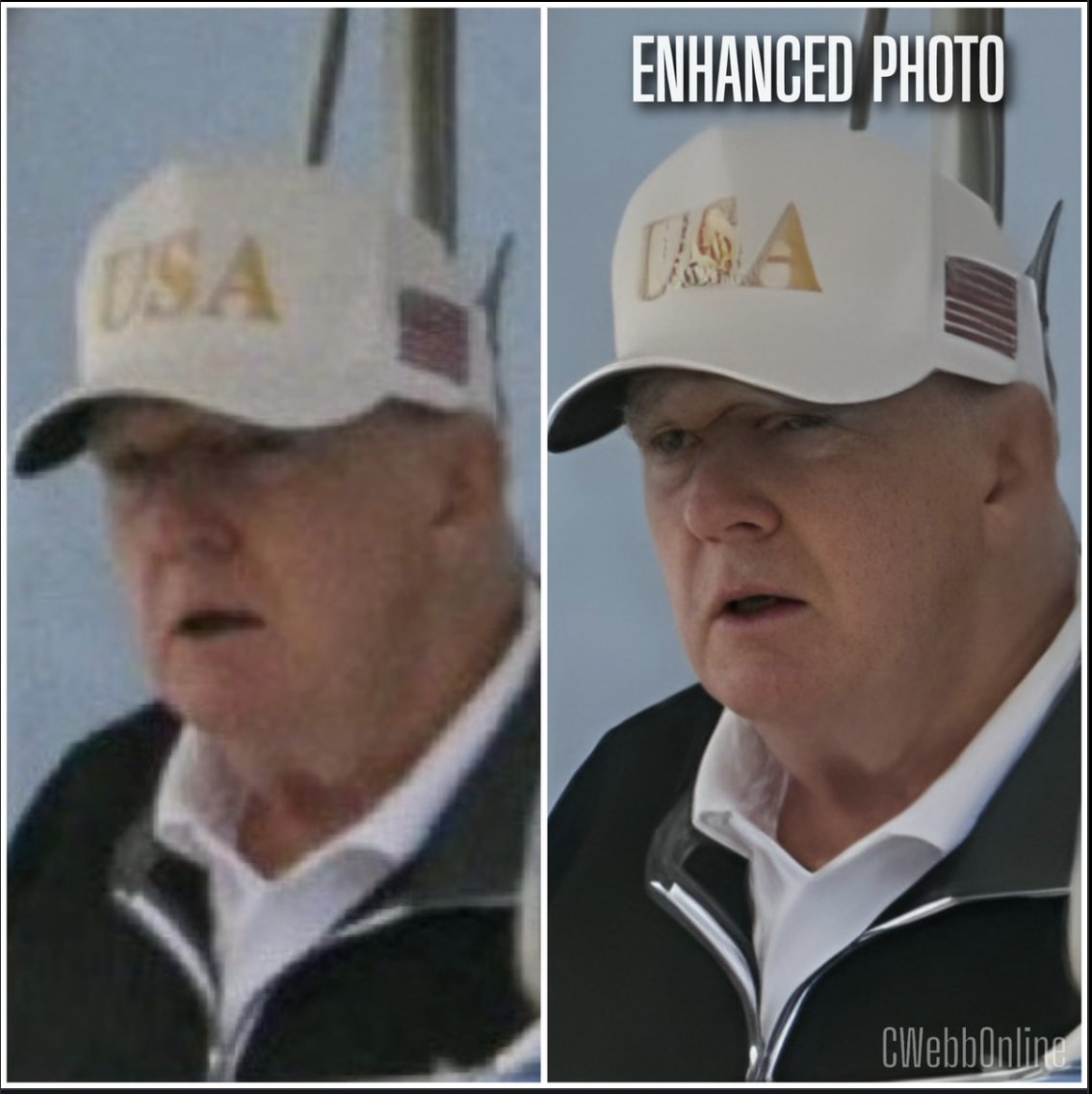
Labor Day weekend had X in a frenzy over President Trump’s health as rumors ran rampant and armchair doctors posted analyses. AI played a starring role when influencer Christopher Webb posted an unflattering “upscaled” version showing a large blemish on the president’s forehead. The image went viral, fueling speculation. Only when Trump spoke Tuesday did he appear unchanged from previous appearances.
Speed Warfare: Newsom vs. Trump
Both camps used AI to accelerate their recent back-and-forth. Newsom’s team possibly deployed custom GPTs trained to mimic Trump’s style, AI image generators creating fake Time covers, and streamlined approval processes. Results: 450% follower increase, hundreds of millions of impressions, Google searches spiking over 1,000%, and 2028 betting odds nearly doubling.
This is a strong demonstration of AI-accelerated memetic campaigns in action. Lean communications teams can now collapse approval cycles and generate outsized attention through velocity alone.
From the Trenches
Each week, I’ll sit down with practitioners who are actually using AI to change how influence works. Not vendor pitches or conference keynotes, we’re going for conversations with people building and deploying these tools in real campaigns, real agencies and real advocacy efforts.
Got someone I should talk to? Know a practitioner pushing boundaries with AI in campaigns, advocacy, or public affairs? Send recommendations my way.
Thank you for reading the first ever edition of The Influence Model newsletter. Reply and let me know what you think!
Take care,
Ben


Leave a Reply
Want to join the discussion?Feel free to contribute!